

Aligning: is a verb—A shot of fearless culture #433
Your weekly dose of culture insights and exercises, one topic at a time.

We talk about alignment as if it were a finish line.
Once the strategy is clear, the priorities are set, and everyone agrees, leaders assume the team is aligned. The job is done.
Until it isn’t.
A new tension surfaces. Two people interpret the same decision differently. Competing priorities get in the way. Legacy projects suck up the time people need to execute new ones.
Leaders often confuse this with resistance. They assume the team is no longer on the same page. Or that some people were never truly on board.
But drift doesn’t mean people don’t want to align. It means something new has entered the system.
The work exposed a tension when strategy met the real world.
Alignment doesn’t fail because the team moves off course. It fails when leaders treat alignment as binary: aligned or not aligned.
Reality is more complicated.
We need to stop treating alignment as a fixed state. It’s a never-ending journey. Confirm understanding, monitor the drifts, and surface hidden concerns. Great leaders don’t expect a linear, tension-free journey.
It’s a lot like sailing, as I explain in my latest piece.
You don’t align once. You keep aligning.
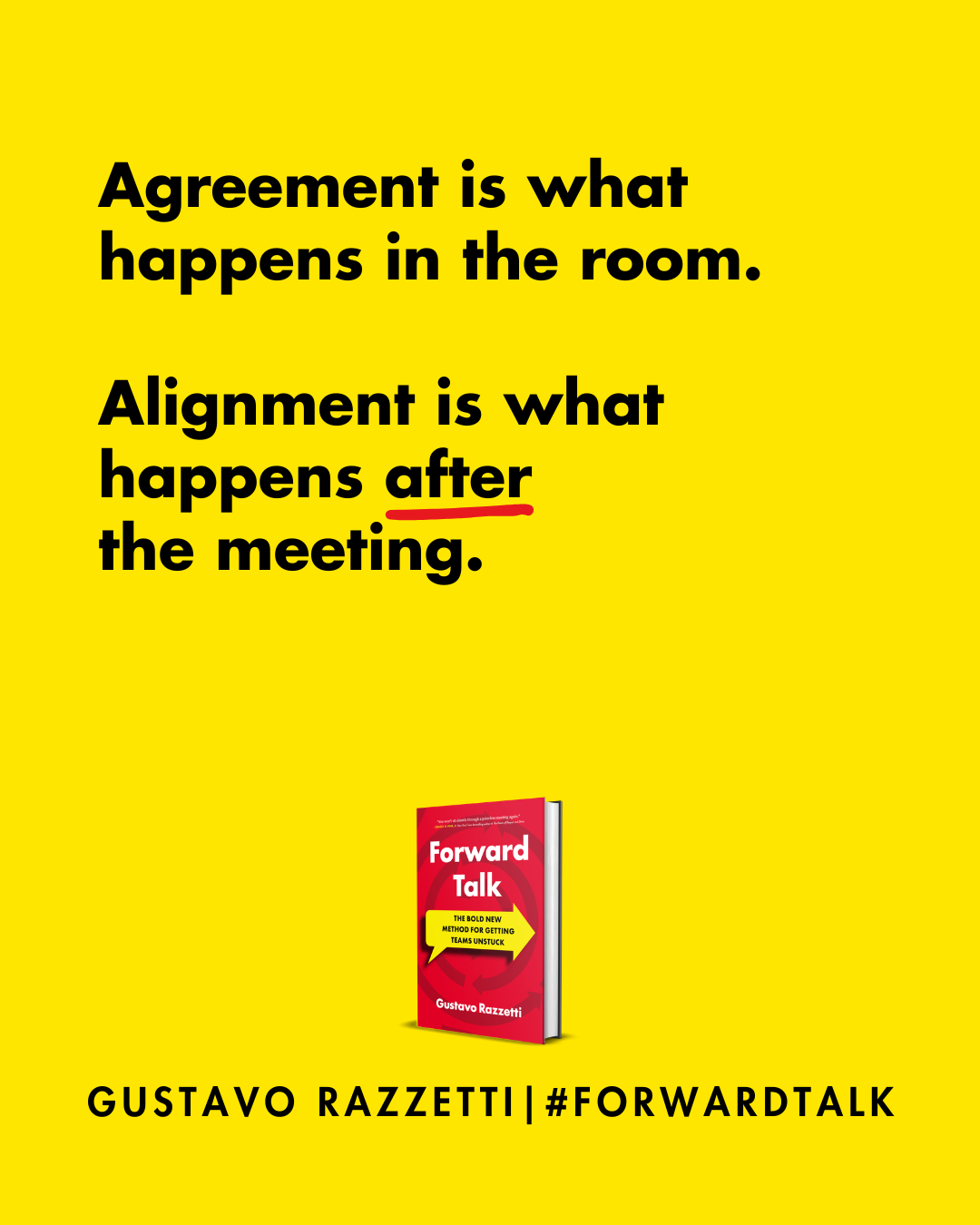
Alignment is a verb.
Explore this week’s newsletter:
→ Team Alignment Isn’t a Destination. It’s an Ongoing Conversation.
→ Exercises and practical resources
Stay fearless, my friend.
Gustavo
In Case You Missed It
→ 5 Signs Your Team Isn’t Really Aligned
Ask Your Team This
What are we agreeing to, and how will it change your work?
⚠️ Try This: The Hidden “But”
People often agree with a decision while still holding concerns.
A “yes” doesn’t always mean complete agreement. It can mean: “I support this, but I see a risk.” Or: “I’m willing to move forward, but I’m not sure this will work.” Or worse: “I agree because everyone else does.”
This exercise helps you surface those “buts” and avoid rushing into action. Alignment requires a conversation, not just a yes or no.
When you notice people rushing to consensus, ask everyone to complete “I agree, but…” using these prompts:
What part of this decision are you least confident about?
What trade-off are we not considering?
What could make this harder to execute than it sounds?
What needs to happen for you to fully support this?
Discuss the answers before taking action. Addressing the hidden “but” is where real alignment begins.
[Post a Review]- Help More People Discover Forward Talk
If you’ve read Forward Talk, please consider leaving a short review on Amazon (preferred) or Goodreads.
Your review helps more facilitators and leaders reduce conversational debt.
🍦 Feed Your Curiosity
People alignment versus purpose alignment
Your boss has no idea what your company's priorities are
Executives fail to execute strategy because they’re internally focused
🎙️ Change Your Conversations, Change Your Culture:
New to this newsletter? Subscribe for free.
Join the Forward Talk program. Better teams start with better conversations. Join the next cohort.

Gustavo Razzetti
CEO, Fearless Culture
Stop avoiding the conversations that matter: Get your copy of Forward Talk