

They already know—A shot of fearless culture #426
Your weekly dose of culture insights and exercises, one topic at a time.

After a workshop on difficult conversations, an executive pulled me aside. He looked like he had been carrying something too long.
He told me about a top performer on his team. She was so reliable that she quickly became his right hand. All performance reviews had been positive.
Then something changed.
Deadlines started slipping. Small things at first, then it became a pattern. She was far from the top performer he promoted twice.
The executive moved from confusion to frustration. Then from frustration to anger. But he still couldn’t say anything. He was afraid of hurting the relationship.
So I asked him, “Do you think she can tell?
He paused.
“Does she notice that you’re not happy? Does she know her work isn’t where it used to be?”
He slowly nodded, “Probably.”
That’s the thing about difficult conversations: silence is never neutral. While you’re rehearsing the worst-case scenario in your head, the other person is as anxious as you are. They’re waiting for you to start that conversation.
My client finally had the conversation. His top performer was dealing with a serious marriage crisis, and she felt too embarrassed to raise it. She didn’t know how to bring it up. Neither did he, until he broke the silence.
I can’t promise every difficult conversation will go that well. But one thing is for sure: avoiding them will certainly change nothing.
Explore this week’s newsletter:
→ How to start a difficult conversation at work
→ Exercises and practical resources
Stay fearless, my friend.
Gustavo
In Case You Missed It
→ 5 ways leaders can facilitate better conversations
Ask Your Team This
What’s a conversation you avoided and still regret it?
⚠️ Try This
Start with curiosity
Most difficult conversations go wrong before they start because we lead with judgment. Curiosity disarms defensiveness and helps us understand what's really going on.
In your next difficult conversation, don’t open with a solution. Instead, describe what you've been observing in one or two sentences — just the facts. Then ask: "Do you see what I'm seeing?" and “What am I missing?”
Leading with curiosity makes it easier to find common ground. Then, it’s easier to discuss what a solution could look like.
[Get Your Copy]- Forward Talk Is Now Available
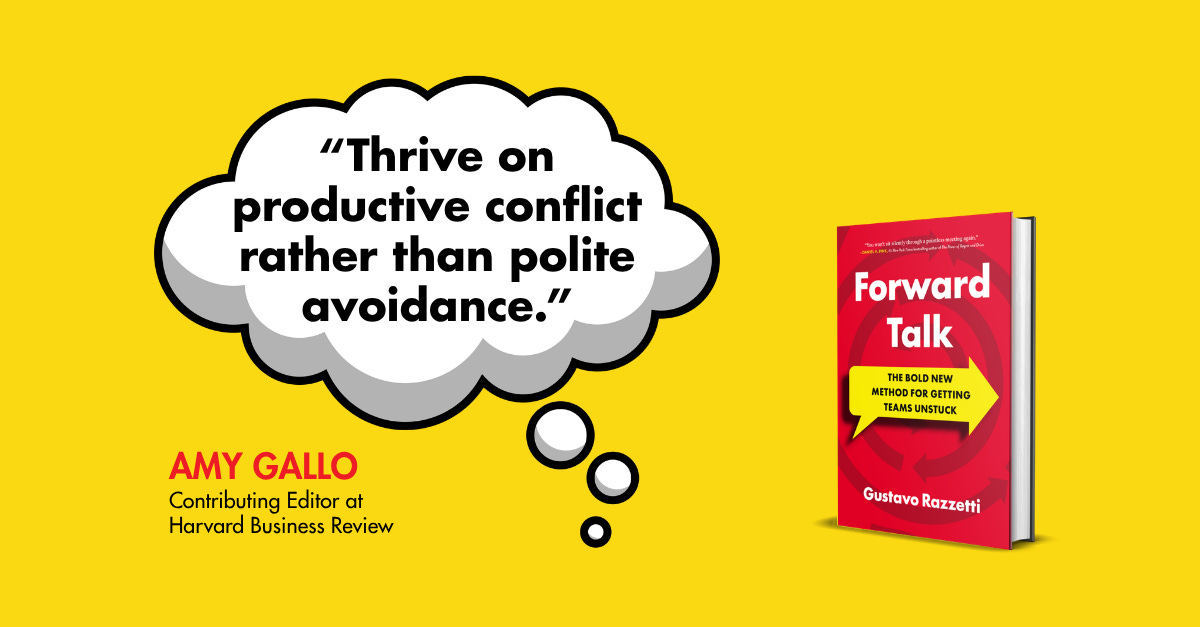
Is your team or client stuck in the illusion of alignment? Grab a copy of Forward Talk for them. Available on Amazon and your favorite retailer.
🍦 Feed Your Curiosity
The power of regret: a conversation with Daniel Pink
Why feedback feels threatening (and how to respond calmly)
How to have the conversations you’ve been avoiding
🎙️ Improve Your Conversations:
New to this newsletter? Subscribe for free.
Join the Forward Talk program. Better teams start with better conversations. Join the next cohort.

Gustavo Razzetti
CEO, Fearless Culture
Tired of stuck conversations? Order my new book Forward Talk