

Optimism with a plan—A shot of fearless culture #438
Your weekly dose of culture insights and exercises, one topic at a time.

Hope is something we all need more of. But first, we need to agree on what we actually mean.
Whenever I introduce the idea of hope to a team, reactions split. Some faces light up. Others look at me skeptically. That reaction doesn’t surprise me.
The first group confuses hope with extreme optimism. Hope for the best, they say. Believers embrace hope without question, almost like faith.
The second group thinks hope is useless. They argue hope isn't a strategy. Skeptics believe real work depends on willpower.
Both miss the point: they treat hope as magic.
This might surprise you: hope is the number one thing people want from their leaders. A global Gallup study found that 56% expect leaders to create a sense of hope, ahead of trust, compassion, and stability.
But only 15% say they’re getting it.
Hope isn’t a mood or having a positive culture. It takes much more than that. Hope is optimism with a plan. It requires possibility and agency. Dreaming that a better future is possible isn’t enough; you also need to do the work.
That’s the power of collective hope. When it spreads across your team, it’s like alignment on steroids. It creates a shared confidence that goals are reachable.
Hope is believing your effort can make a difference. It makes taking risks worthwhile.
Relearn what hope really means. That’s my invitation for this week.
Stay fearless,
Gustavo
My Latest Article
→ Why Hope Is a Strategy (Really)
In Case You Missed It
→ Change Hurts: How to Lead Through Loss, Not Logic
Ask Your Team This
What gives you hope about our future right now?
⚠️ Try This: Turn Hope into a Plan
This exercise will help your team believe your goals are achievable.
Share the image below and ask people to pick which lens they default to. Everyone chooses a side.
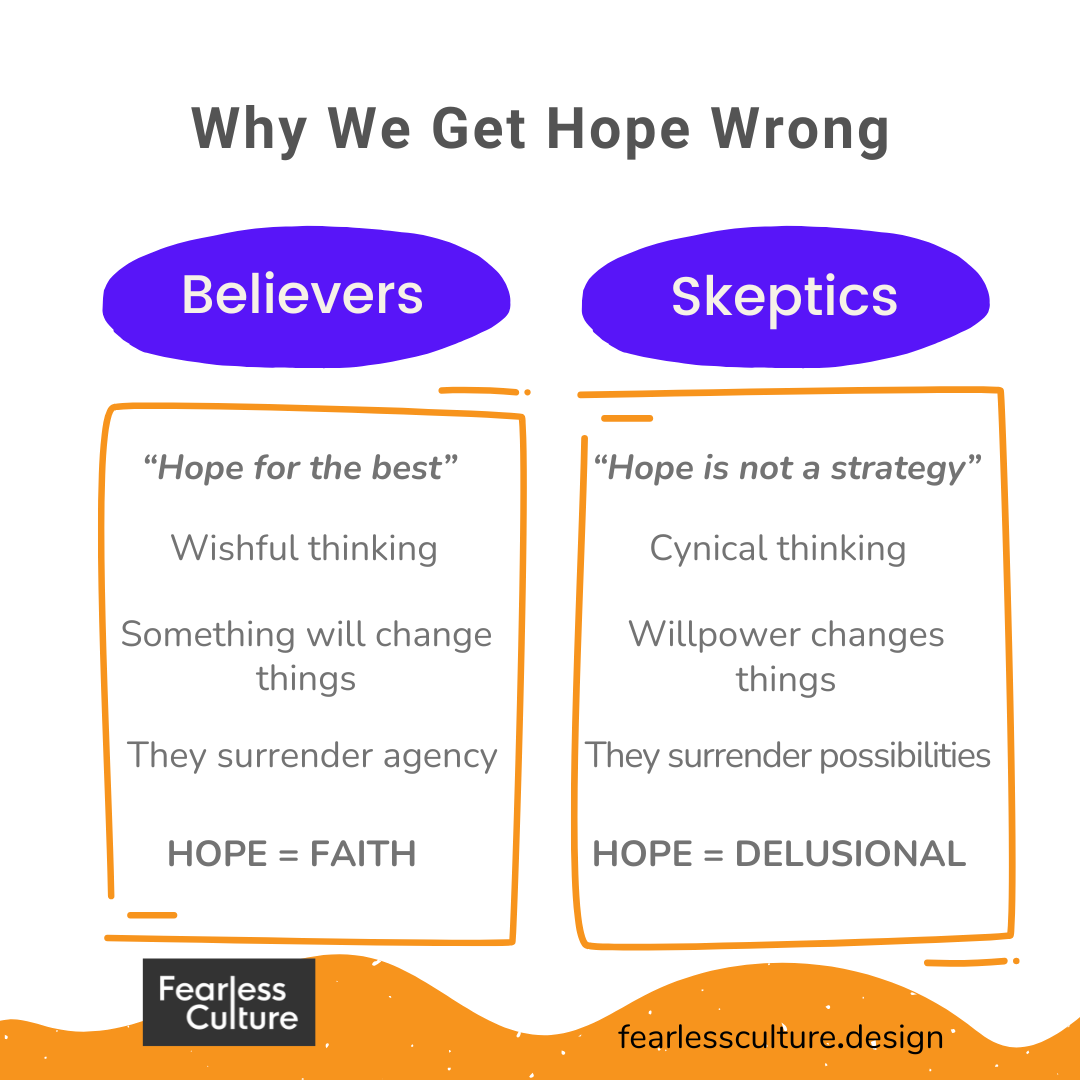
Choose a challenging project your team is working on. Ask everyone to take a position. push it to the extreme, and argue it from either a believer’s or skeptical’s perspective.
Believers argue why things will work out. What possibilities do you see? What pathways could make this succeed? What assets do we have? What signals would tells us we’re on track?
Skeptics argue why things might not work out. What assumptions are we making? What makes success unlikely? What constraints are real?
Have each side present its case while the other listen. Then integrate both perspectives by capturing: What’s possible? What’s within our power to make it happen? What will we do about it?
Turn the best of both sides into hope with a plan: what people believe is possible + what they’ll do to make it happen.
🍦 Feed Your Curiosity
Hope: what people need most from leaders
Your positive thinking could be holding you back
How small wins unleash creativity (and hope)
Hope theory explained: building resilience through adversity
🎙️ Better Conversations, Better Results:
New to this newsletter? Subscribe for free.
Join the Forward Talk program. Better teams start with better conversations. Join the next cohort.

Gustavo Razzetti
CEO, Fearless Culture
Stop avoiding the conversations that matter: Get your copy of Forward Talk