

The person you dismiss might be right—A shot of fearless culture #427
Your weekly dose of culture insights and exercises, one topic at a time.

The most powerful voice in the room is rarely the loudest one.
Franklin D. Roosevelt is widely considered one of the most consequential leaders of the 20th century. He pulled the US out of the Great Depression, modernized the role of government, and led the country through World War II.
But he had blind spots. And one person saw them more clearly than anyone else: his wife, Eleanor.
Unlike most first ladies, Eleanor didn’t stay in the background. She traveled the country, listened to people, then came back and told Franklin what was working and what wasn’t.
She pushed him on issues most advisors avoided: segregation, anti-lynching legislation, the rights of people his policies were missing.
Eleanor became the uncomfortable voice inside the White House.
FDR didn’t always agree. He didn’t always act fast enough. Sometimes he didn’t act at all. But he kept listening.
Every leader has an Eleanor. A squeaky wheel whose perspective makes them uncomfortable. Whose observations they’d rather not hear. And most spend a lot of energy trying to quiet them down.
That’s the mistake.
OpenAI’s CEO, Sam Altman, recently admitted to “being conflict-averse” — and paid for it publicly and repeatedly. When disagreement is silenced, people stop raising issues.
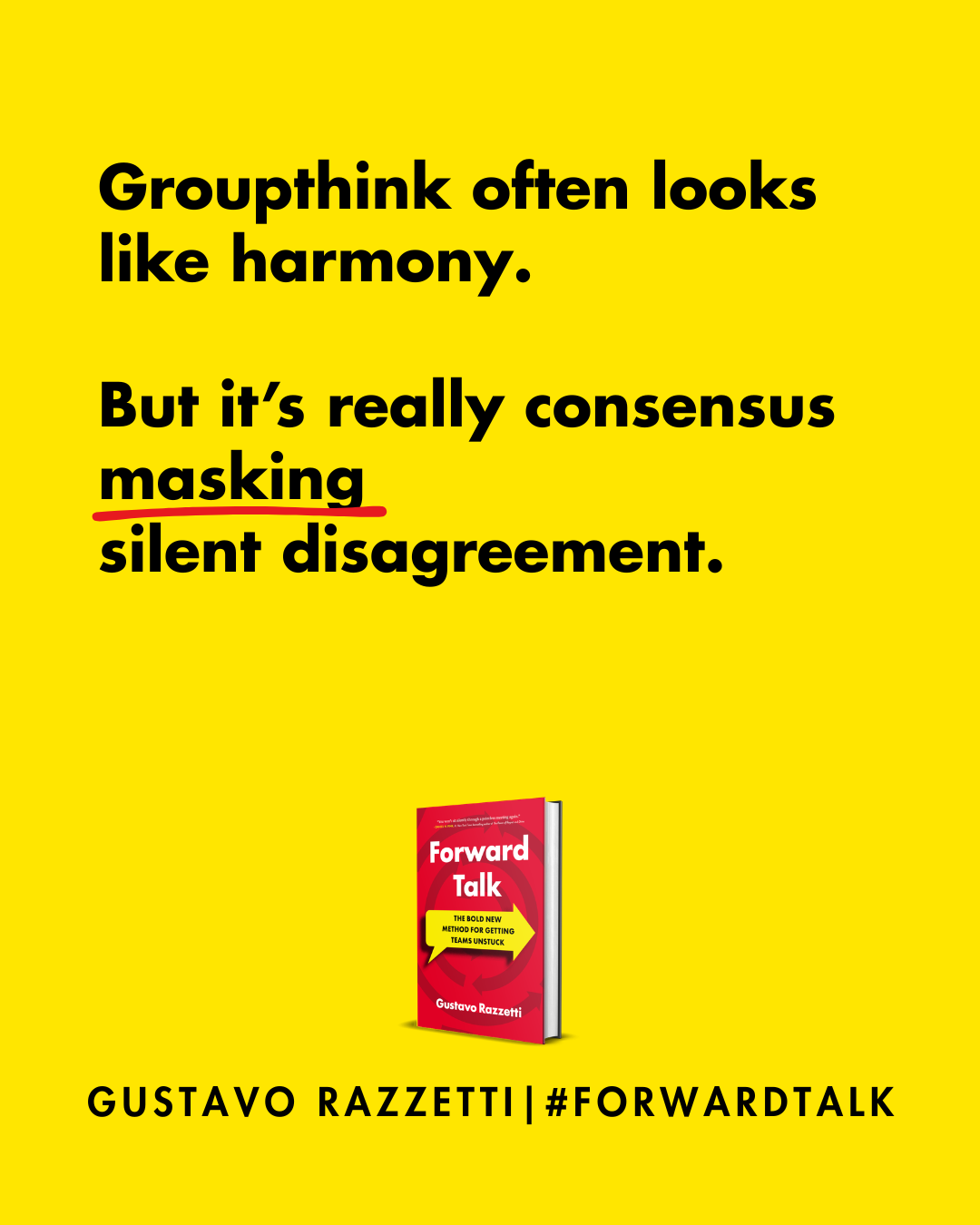
Groupthink is a massive corporate liability.
Explore this week’s newsletter:
→ OpenAI’s biggest liability is not safety. It’s groupthink.
→ Exercises and practical resources
Stay fearless, my friend.
Gustavo
In Case You Missed It
→ How to start a difficult conversation at work
Ask Your Team This
Which uncomfortable voice do we need to pay more attention to?
⚠️ Try This - What if they’re right?
This is an individual exercise. Set aside 15 minutes, find a quiet space, and be honest with yourself.
Step 1 — Identify the people you tend to dismiss
Think of colleagues, direct reports, or stakeholders you regularly discount. Who do you mentally label as “always negative,” “not strategic,” or “missing the point”? Write their names down.
Step 2 — Recall specific moments
Pick one or two recent conversations. What did they say, ask, or challenge that made you dismiss them?
Stick to the facts.
Step 3 — Dig deeper
Ask yourself why their perspective bothered you. Do it three times.
You’re looking for what’s underneath it. Focus on understanding the dynamic, rather than justifying your behavior.
Step 4 — Sit with the cost
Now ask yourself:
What if they were right?
What are you missing by dismissing their opinions?
What could it cost you or your team if they were right?
Groupthink is a corporate liability. Often, people are not being difficult. They just see things that we miss.
[Get Your Copy]- Forward Talk Is Now Available
Is your team or client stuck in the illusion of alignment? Grab a copy of Forward Talk for them. Available on Amazon and your favorite retailer.
🍦 Feed Your Curiosity
How to make it easier for others to tell you the truth
Anthropic CEO left OpenAI because disagreement wasn’t tolerated. Then he created Claude.ai.
How to disagree with your boss without getting fired
🎙️ Change Your Conversations, Change Your Culture:
New to this newsletter? Subscribe for free.
Join the Forward Talk program. Better teams start with better conversations. Join the next cohort.

Gustavo Razzetti
CEO, Fearless Culture
Tired of stuck conversations? Order my new book Forward Talk