

Forward Talk Explained: How to Change the Conversations that Matter
The method to spot the patterns that create conversational debt and gets teams unstuck

Since I started speaking about Forward Talk, no idea has resonated more than Conversational Debt. On podcasts, in workshops, and in talks, people recognize it immediately. The concern nobody raised. The decision that never stuck. The meeting where everyone agreed on something, but understood something completely different.
Forward Talk isn’t just about becoming aware of Conversational Debt. It’s the method for starting to pay it off.
That’s what I cover in this article: what Forward Talk is, the patterns that keep teams stuck, and how to break them.
What Is Forward Talk?
Forward Talk is a framework for improving conversations by addressing root problems and shifting to a future-oriented mindset. It builds commitment and reduces Conversational Debt.
It’s the antidote to Backward Talk when teams stay anchored in the past and avoid the real issue, or the conversation altogether. Three patterns keep teams stuck: avoidance, blame, and groupthink.
Forward Talk addresses the conversations that matter. The ones that shape how your team works, whether people are aligned, whether they belong, and how they collaborate.
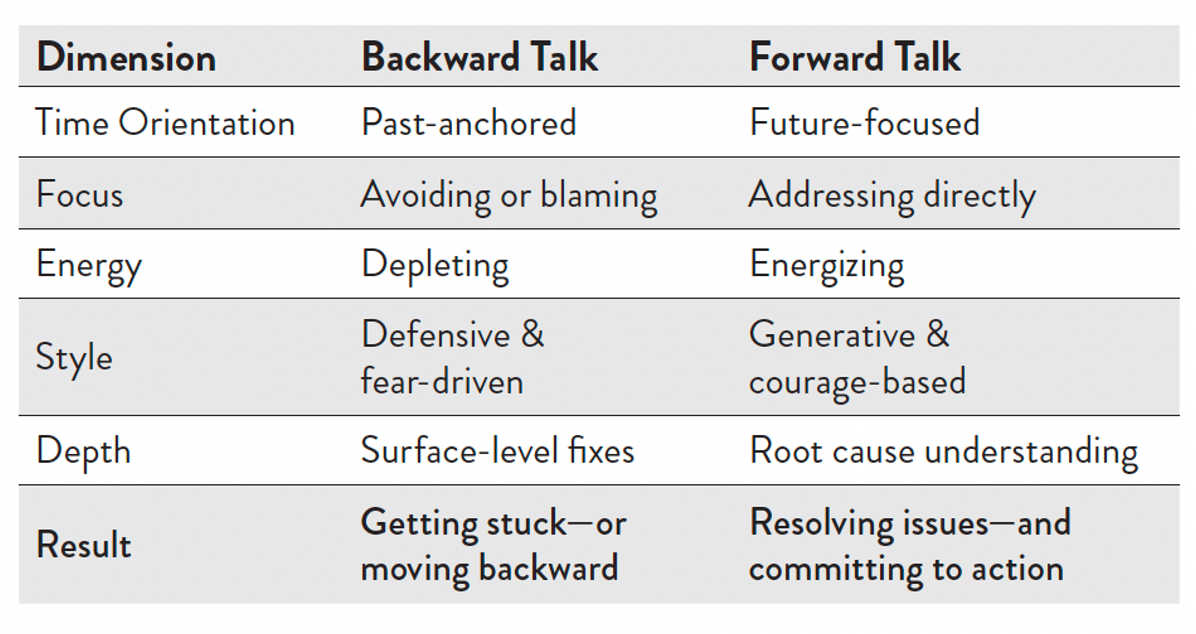
The Forward Talk Matrix: The 4 Conversation Patterns
The Forward Talk Matrix maps team conversations on two dimensions:
• Time orientation: Is the conversation focused on the past or the future?
• Issue engagement: Is it avoiding the real issue, or addressing the root cause?
Those two axes create four quadrants (or patterns):
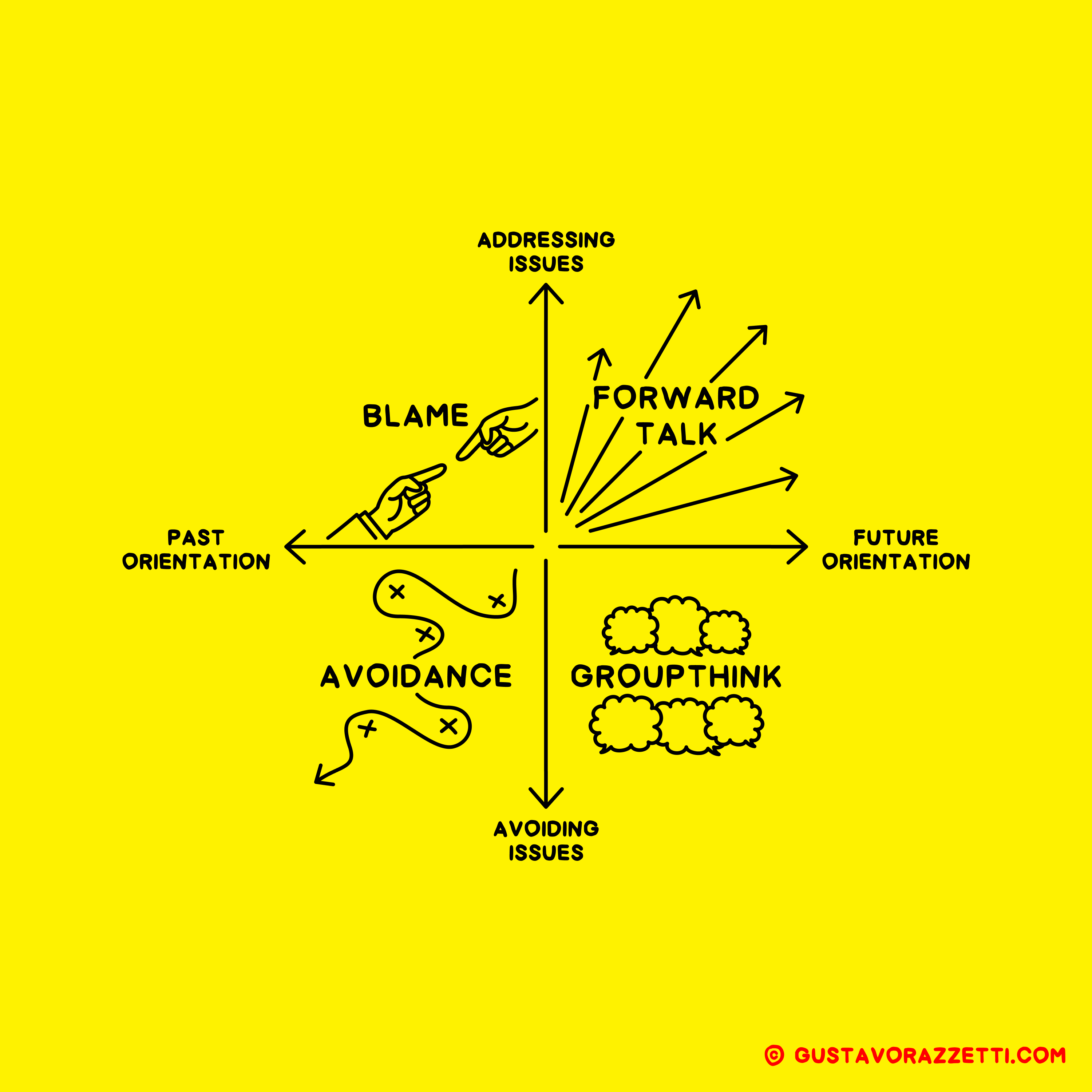
Three of the zones are Backward Talk:
• Avoidance: The team stays silent, or the issue never makes it onto the table. “Let’s table this for later.” “Someone else will bring this topic up.”
• Blame: The team digs in, but focuses on who to blame instead of solving the problem. “Who dropped the ball?” “Whose fault is it?”
• Groupthink: The team promotes consensus to avoid real conversations. Agreement is superficial, not real. “Be a team player.” “This idea will make everyone happy.”
Forward Talk is the way out: teams address the real issue, seek resolution, and move forward rather than getting stuck in the past.
Use this matrix to spot the most common patterns on your team. Once you start seeing these dynamics, you can’t unsee them.
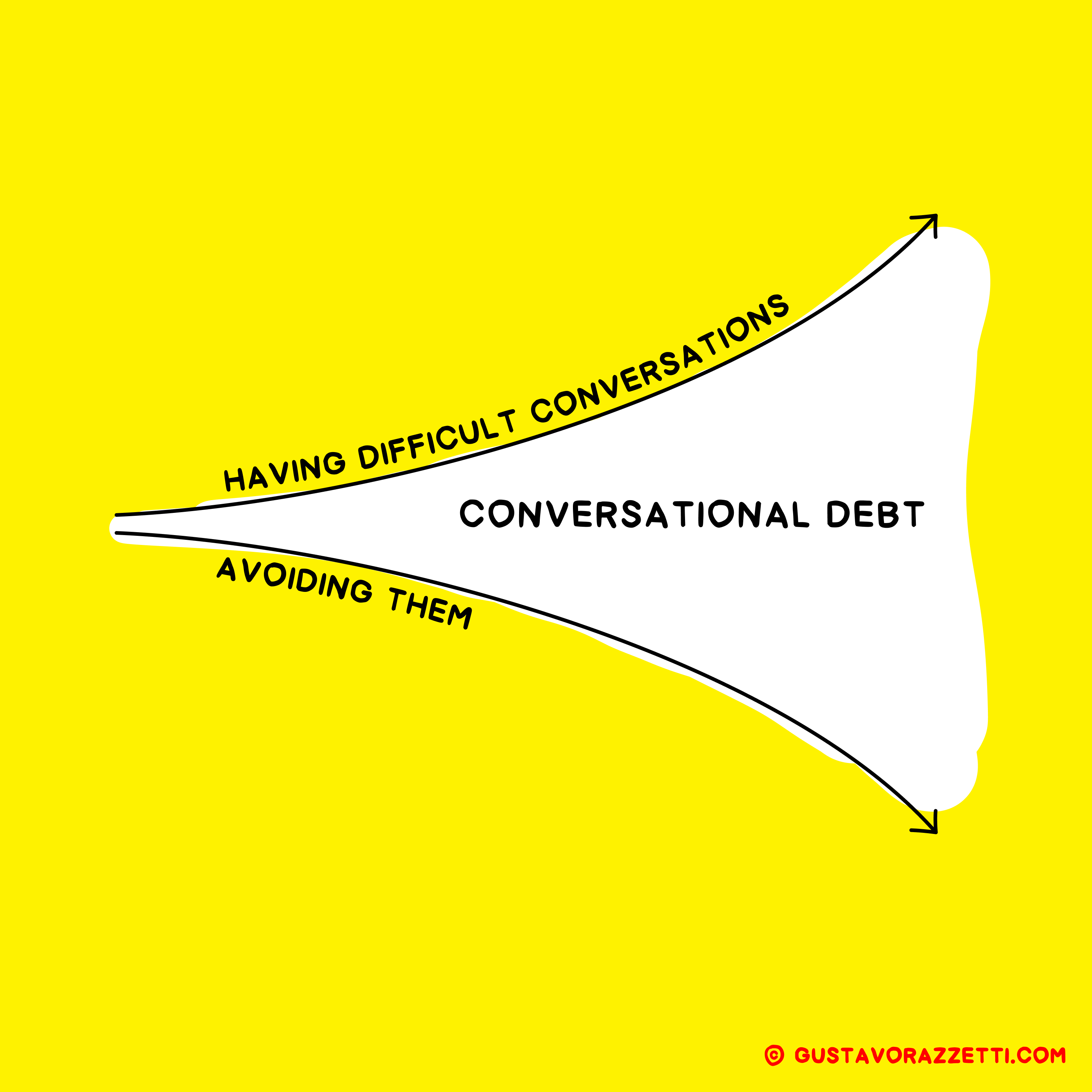
Conversational Debt: The Price We Pay for Our Silence
Every conversation your team avoids is anything but cheap. I call it Conversational Debt: the growing cost of the crucial conversations we avoid or mishandle. Like financial debt, it starts small and compounds. A concern left unspoken, a decision rushed, a conflict smoothed over. Each one makes the next conversation harder, and each act of silence teaches others that speaking up isn’t welcome.
There are three types of conversational debt (for more detail, check my previous article):
· Alignment Debt: people nod in agreement but leave with different ideas of what they decided
· Belonging Debt: people filter feedback or concerns to protect group harmony
· Collaboration Debt: decisions are never final, so issues create endless follow-up meetings
You can measure and track how these patterns affect your team with the free Conversational Debt Assessment.
CPR: The 3 Forward Talk Interventions
When your team gets stuck in backward patterns, good intentions aren’t enough. You need intervention.
Forward Talk is about regaining conversational agency: to recover from the quiet surrender that happens when we stay silent or let groupthink take over:
When we avoid a conversation, we surrender our voice. We stay quiet, hoping someone else will speak up or share a similar concern.
When we don’t challenge groupthink, we surrender our judgment. We adopt the group’s perspective as our own, even when something feels off.
When we blame others, we surrender our power. We focus on who caused the problem instead of solving it.
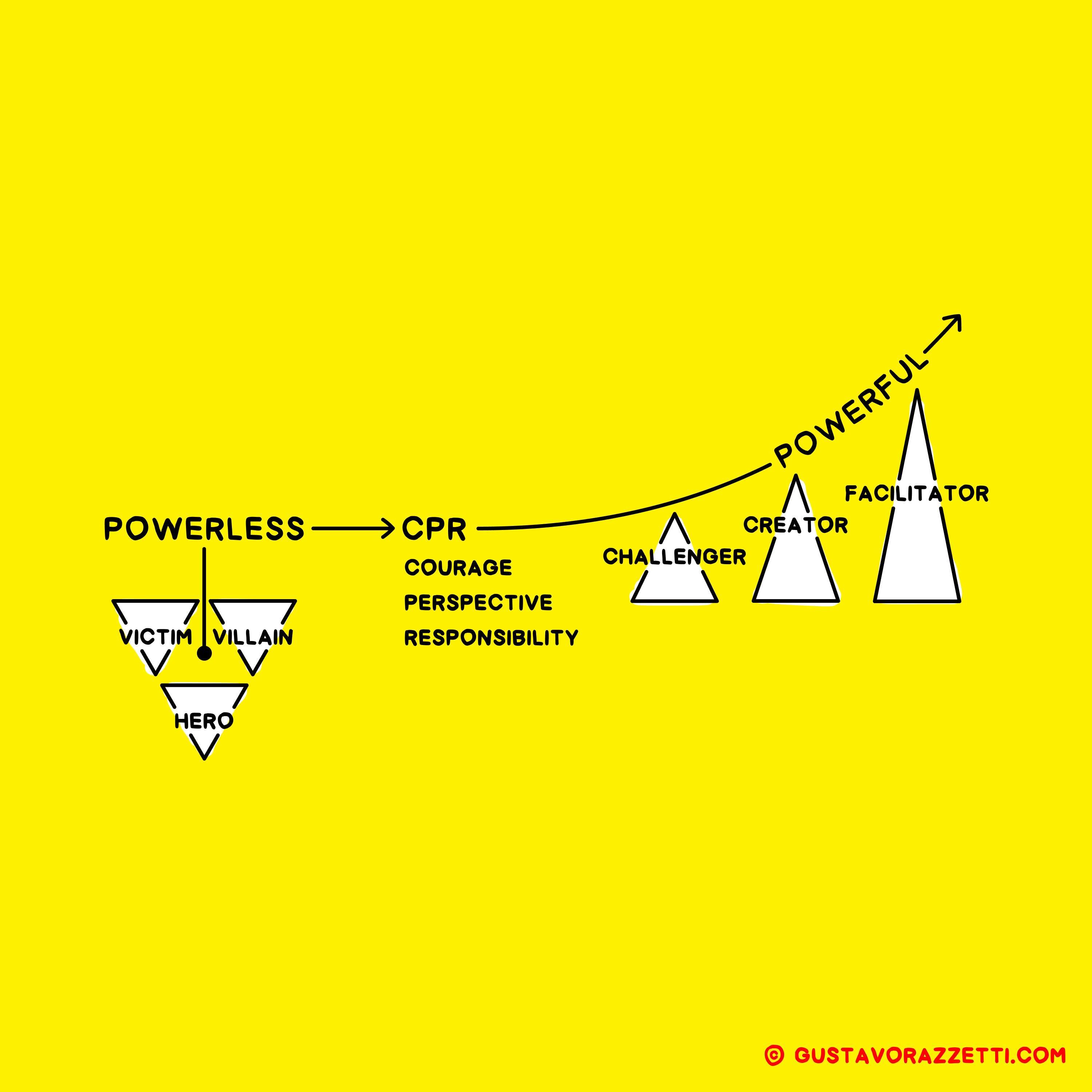
CPR is the intervention: Courage, Perspective, and Responsibility.
Courage is how you reclaim your voice: you speak up and name what people sense, but no one is saying.
Perspective is how you reclaim your judgment: you trust your read of reality and challenge groupthink to prevent quick consensus from taking over.
Responsibility is how you reclaim your power: you own your role, your mistakes, and your part of the solution.
Just like medical CPR revives a failing heartbeat, conversational CPR restores agency and the flow of healthy dialogue. When conversations flatline — when people stay quiet, surrender their thinking, or play the blame game — CPR brings the conversation back to life.
Forward Talk Changes Team Patterns
Forward Talk isn’t about building better communication skills. It’s about addressing the recurring conversational patterns that shape how your team works, makes decisions, and solves problems.
You work on three levels:
1. The backward patterns that get teams stuck:
What conversations do we keep parking for later? (avoidance)
What past issues keep us going in circles? (blame)
Where do we agree too quickly without real discussion? (groupthink)
2. The costly patterns that create conversational debt:
How often do we hear “that’s not what we agreed on” after we supposedly aligned? (alignment)
Do people hold back risks or unpopular views to avoid looking difficult? (belonging)
When the team needs to make a decision, is it clear who actually owns the call? (collaboration)
3. The healthy patterns that move teams forward:
What’s the real issue we actually need to talk about?
What concerns haven’t we surfaced yet?
What’s my part in this, and what do we do next?
Forward Talk helps your team spot the patterns that keep them stuck, choose the right ways to interrupt them, and prevent conversational debt from piling up. Once the team learns to see the patterns, it becomes easier (not easy) to change them.
Do I need psychological safety first?
Psychological safety has become the default answer when people stay silent. Teams avoid conflict, people don’t challenge decisions, or concerns go unspoken, and the diagnosis is often the same: it’s not safe enough.
Through more than 1,500 workshops, I watched people shift responsibility elsewhere. Psychological Safety became an excuse to stay quiet. They waited for perfect conditions to speak up. The burden of fixing things fell on leaders, the culture, even the organization.
My research suggests that fear is only part of the equation. When I asked 5,350 professionals why they stay silent, the answer wasn’t just fear. The number one reason was futility: “It won’t change anything.” I call this the Pointlessness Paradox.
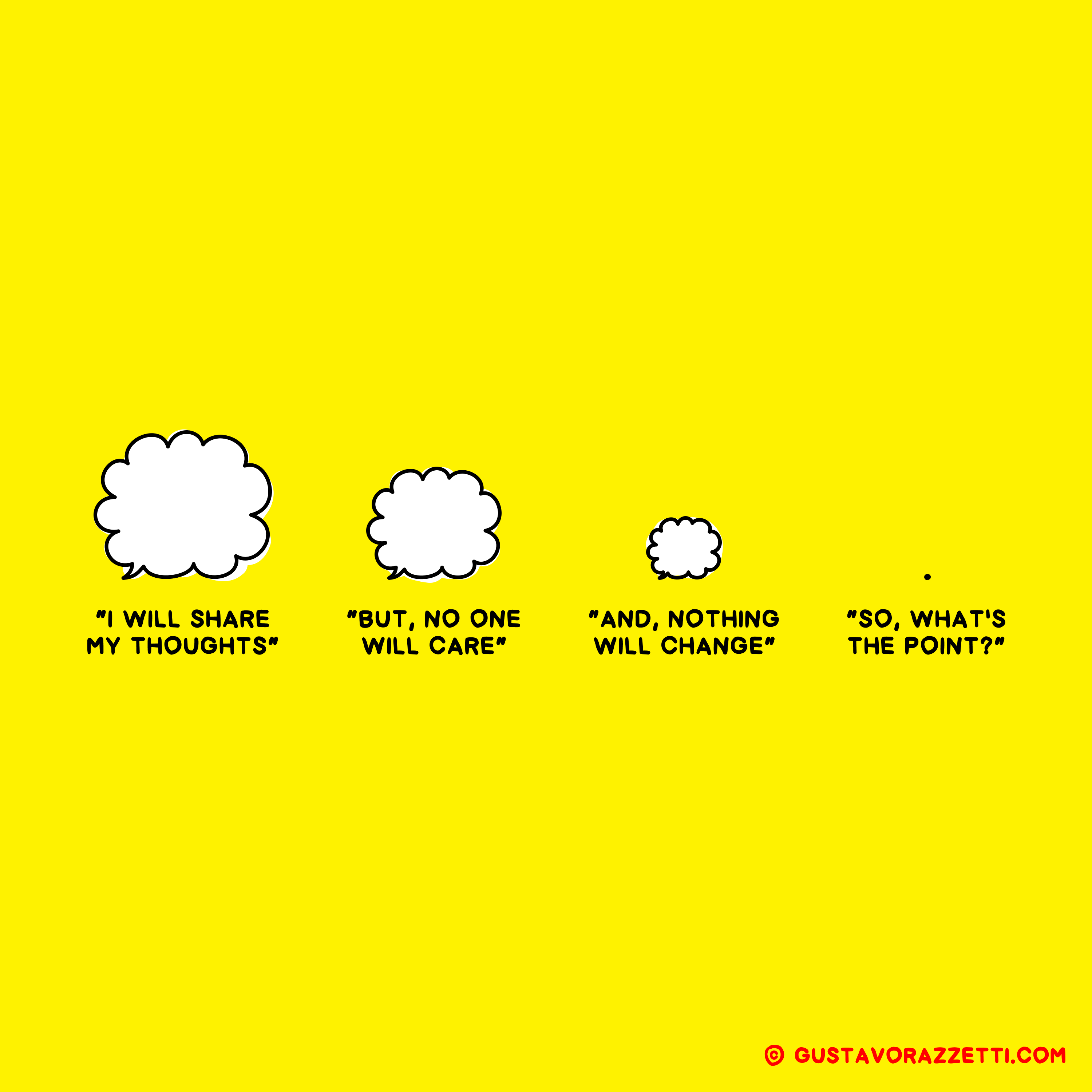
Forward Talk addresses this gap by building conversational agency. Individually, team members learn to reclaim their voice, trust their judgment, and take responsibility. They want to move things forward. They can’t wait for perfect conditions. Collectively, the team builds social courage: the ability to spot unhealthy patterns, break the cycle, and improve their conversations.
Psychological safety can reduce fear. Forward Talk helps people act when fear, doubt, or futility are present.
What Tools Does Forward Talk include?
The Forward Talk toolkit includes everything your team needs to spot patterns, work through them, and prevent them from coming back.
The Forward Talk toolkit includes:
Canvases to work on patterns: Breaking the Conversational Loop, the Conversational Debt Spiral, the CPR Canvas, and the Forward Talk Canvas.
Strategic tools to tackle the deep, structural debt blocking the whole team.
Everyday interventions, like conversational reframes that redirect a conversation in the moment.
Exercises to build the trust and habits that prevent conversational debt from piling up.
You’ll find all of them in the book, with their respective facilitation guides.
What Does Forward Talk Look Like in Practice?
I was once hired as a last resort. A multibillion-dollar tech company had acquired a healthcare platform, and everything was going wrong: the culture, the integration, the business. The COO was blunt: find a path forward, or undo the deal.
Both sides believed they’d been better off before. They were stuck in the past, blaming each other.
So, we changed the conversation. “This acquisition was a mistake” became “What can we do together that we couldn’t before?” Using the Culture Evolution Canvas helped the team find common ground: what to eliminate, accept, preserve, and create together. The fight over who was right became a plan for what to build.
The deal survived. Those skipped conversations were the debt, and Forward Talk is how they paid it down.
Want to Bring Forward Talk to Your Team?
→ Buy copies of Forward Talk: The Bold New Method for Getting Teams Unstuck
→ Join the Forward Talk program (new cohort open)
→ Bring Forward Talk to your organization (hire Gustavo as a speaker or workshop facilitator)