


Conflict rarely starts with a single event. The narrative we create turns a small disagreement into bigger tension.
After listening to a COO complain about his colleagues’ long emails—too much context, unclear expectations, no bullet points—I asked him, “Have you ever addressed this with them?”
“No, that’s how everyone works here,” he replied. HR and Marketing loved long emails and meetings. The COO and CEO worked very differently. When I spoke with other team members, I heard the same story from a different angle. Everyone judged their colleagues’ ways of working against their own preferences.
This isn’t an isolated story. People assume others should do things the way they do. Over time, those expectations become unwritten norms, and frustration follows. The solution isn’t pleasing everyone but defining how the team should work together.
Finding common ground is crucial for effective collaboration. Clarity reduces everyday friction. You keep operating on assumptions, or you can invest time in writing explicit team agreements. Here’s how (and why).
The Cost of Unclear Team Expectations
That COO wasn’t dealing with a difficult colleague. He expected others to comply with an agreement no one had actually made.
This might sound like a minor misunderstanding, but dismiss the cost at your own peril. People build stories around these “little things.” It quickly becomes personal. Executives end up spending more energy fighting over misunderstandings than discussing a strategy.
The golden rule says we should treat others the way we want to be treated. But that’s wrong. Each person has different expectations. That’s why I ask team members to complete their personal washing instructions (how they want to be treated) before we look for common ground.
We’re also terrible at reading people, even our own partners. Consider the emotional tone of written messages. A Cornell University study found that we overestimate how well others understand our tone. Email senders were confidently set up for disappointment. Receivers understood the tone only about 56% of the time (nearly a coin flip).
That ambiguity shows up as friction. An innocent email escalates into a tug-of-war chain. Alignment lasts a week. A deadline slips because instructions were clear only to the leader, not the team doing the work.
Misunderstandings quickly add to your team’s conversational debt. You pay the interest in rework, infighting, and meetings that achieve nothing.
Clear team agreements won’t solve all your team problems. But they will reduce unnecessary friction and stress. They’re vital for any team and even more essential for remote or hybrid teams where signals are harder to read.
Why You Should Write Your Team Washing Instructions
Clarity is everything. But finding common ground doesn’t mean consensus. The goal isn’t to keep everyone happy. Groupthink delivers mediocre results. Focus on what’s best for the team, not harmony.
Here are five benefits of writing team agreements down.
Clarity lowers stress:
Uncertainty wears people down faster than workload does. Role-stress research shows that unclear expectations hurt performance, commitment, and satisfaction more than heavy workloads. When teams seem overwhelmed, leaders often reshuffle tasks. Clarity is cheaper and more effective.
People discuss the work, not each other:
Without a shared standard, every disagreement becomes personal and judgmental. Interpersonal conflict harms teams more than task conflict does, as De Dreu and Weingart found in their review of team-conflict research. An agreement gives people a standard to point to, keeping the argument about a decision, not colleagues.
Less Talking, More Doing:
When everyone shares the same picture of how work moves, people stop meeting to confirm what’s already understood. John Mathieu and colleagues found that teams with shared mental models outperform teams that only share processes. Quick syncs and status meetings drop because the team is aligned.
Speed up onboarding:
Clear norms make expectations easy to transfer, and week one stops being a guessing game. GitLab wrote its norms down so a new hire could answer questions independently instead of interrupting 4 colleagues. Darren Murph said it best: “It’s impossible to focus on output when you can’t articulate what success looks like.”
Leaders stop being referees:
Without a shared standard, small friction gets escalated. Two people disagree about response times, and the manager must intervene. With an agreement, colleagues can correct each other directly. The norms, not the leader, decide what’s right or wrong.
How to Use the Team Washing Instructions Canvas
If you’ve been following my work for a while, you’ve probably heard of (and maybe even used) the Washing Instructions Canvas. This is an updated version: I improved the sections and questions based on how I facilitate these discussions with my clients. The new template is much closer to how I use it and covers more ground, including AI norms.
The template is divided into four sections, as you can see below.
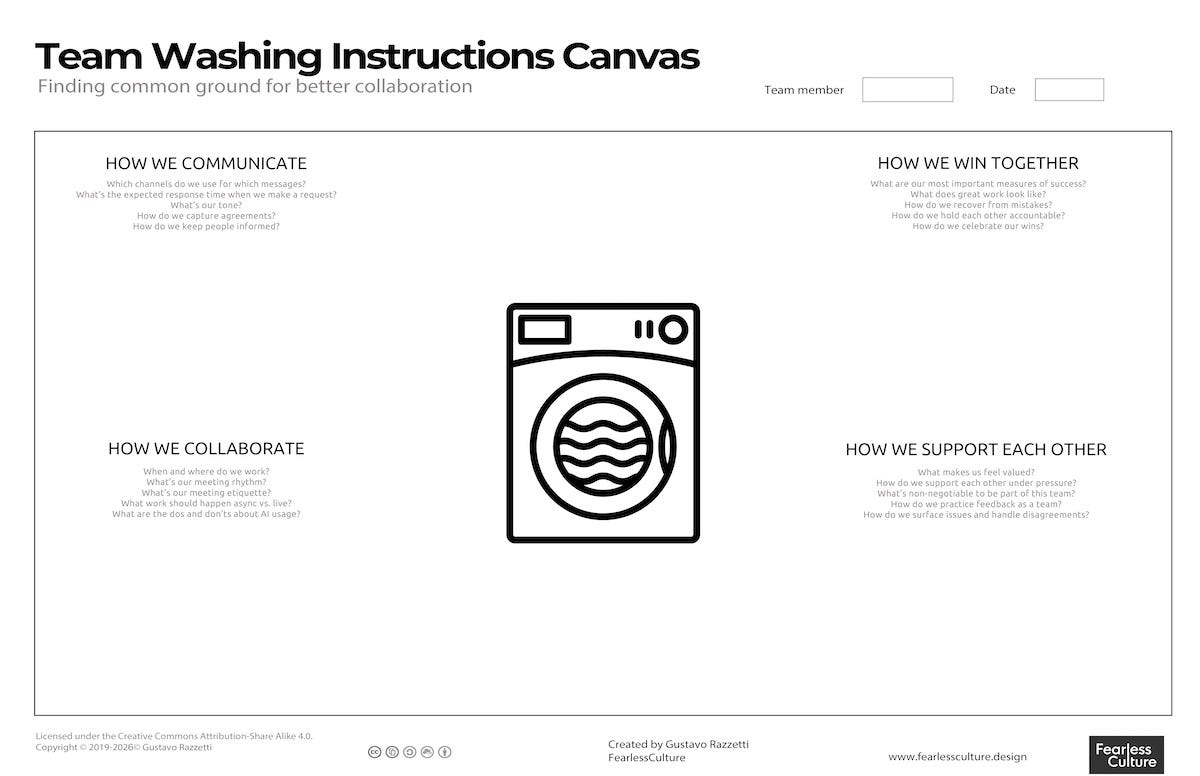
Download the updated Team Washing Instructions template
Depending on the team size, everyone works together, or I split people into four groups, one per section. Then each group presents their recommendations; we debrief and integrate feedback from the others.
Let’s dive into each quadrant and what it should cover.
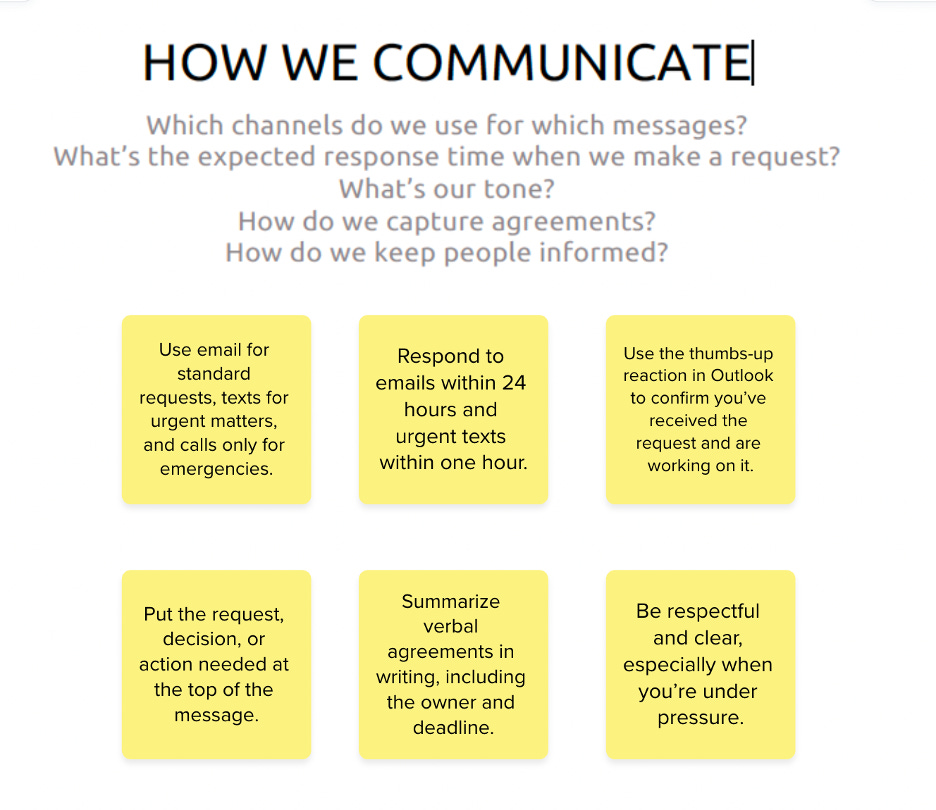
How we communicate
Communication is where collaboration breaks most often, because we take too much for granted. Clarify which medium carries which message, how something gets escalated when it’s genuinely urgent, and what turnaround people can expect. A 24-hour window for answering emails reduces the need for annoying reminders. It teaches people to wait, and it teaches senders to flag exceptions. Decide how agreements get recorded too, so final decisions are easy to find.
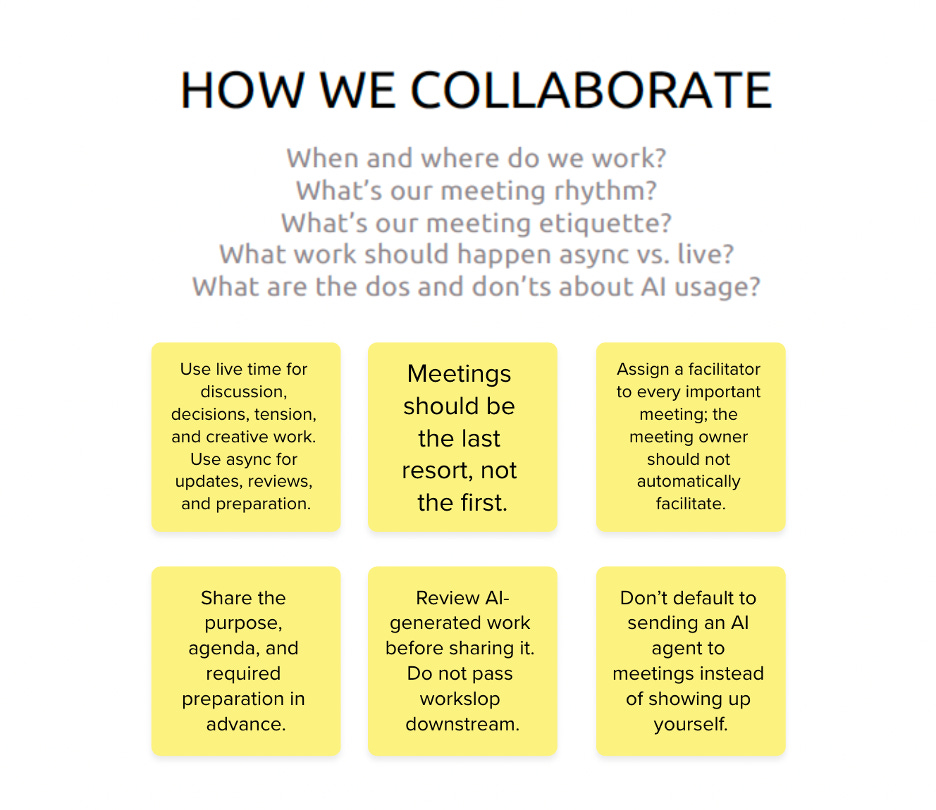
How we collaborate
This area governs the team’s shared time, the resource we waste most. Clarify when and where people work, the team rhythm, and how to make the best of async and sync collaboration. How teams use AI is a growing source of friction. Some team members get upset when leaders send an AI notetaker instead of attending themselves. Decisions are delayed, and meetings get rescheduled. This section helps eliminate unnecessary meetings and make the ones that matter more efficient.
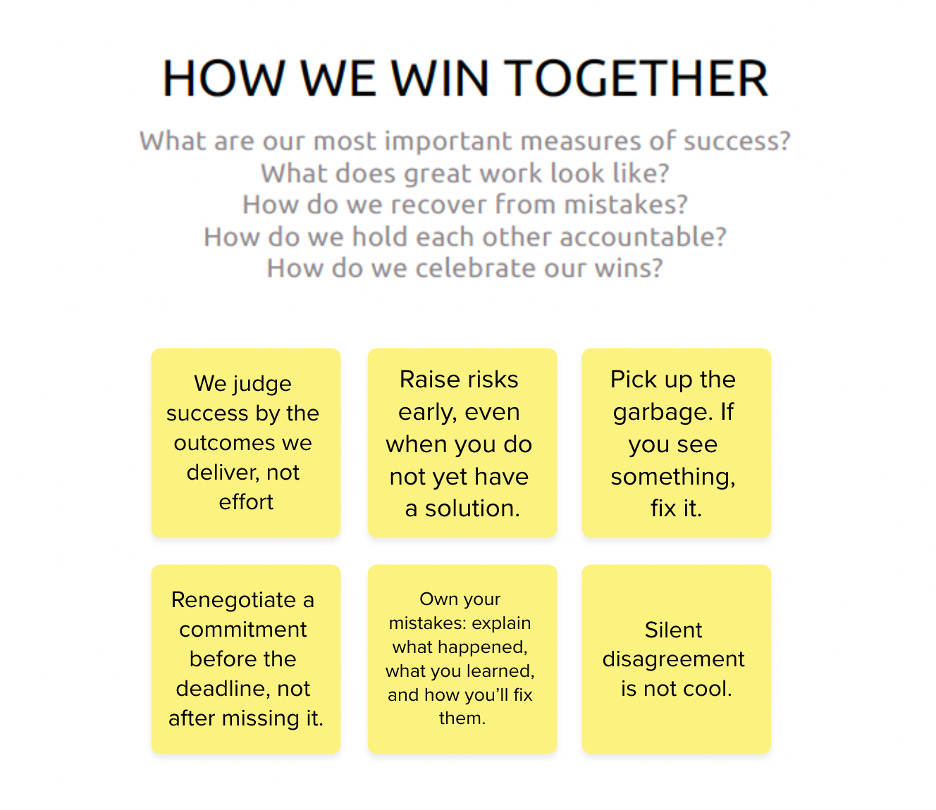
How we win together
Performance conversations turn personal when standards stay implicit. Clarify what great work looks like, how to recover from mistakes, and how people hold each other to it. High-performing teams don’t just have high standards; they clearly define how they win together. Washing Instructions aren’t rigid rules. Remember to capture how you’ll celebrate wins.
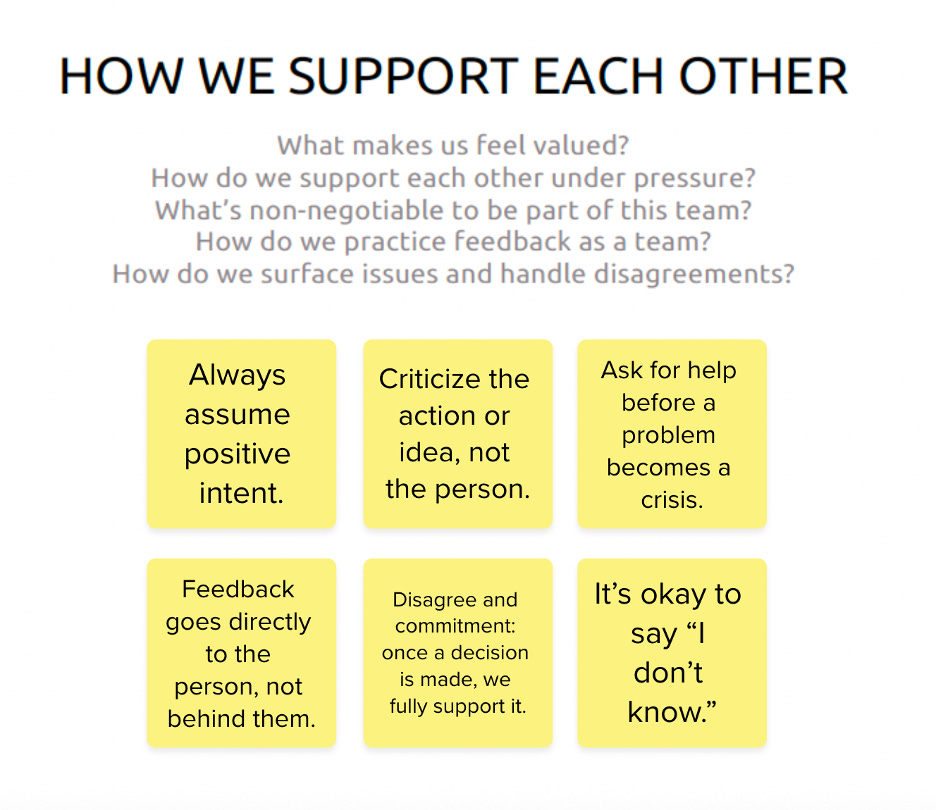
How we support each other
Helping each other is the foundation of collaboration. We’re stronger together. This quadrant covers recognition, support, and what’s non-negotiable. It helps build a sense of belonging: from what makes us feel valued to how we practice feedback. A strong team doesn’t just capture how they work together; it defines how team members make each other stronger.
Mistakes to Avoid with Team Washing Instructions
Trying to make it perfect: Start with a first draft that you can implement quickly–without rushing. Codify the informal rules that already work. Clarify the easy things before tackling every conflict. “How We Communicate” is often the easiest section for teams to crack. Good enough is better than perfect.
Treating it as a one-off activity: When I facilitate this with a team, I always ask them to commit to an initial test period. Try the agreements for a few weeks and see what happens. What needs further clarification? What’s missing? What can be improved? But the iteration doesn’t stop there. The Team Washing Instructions is a living document. When conflict shows up, ask: what new instruction could reduce friction?
Not being specific enough: This happens with most frameworks or canvases. People tend to write abstract ideas or vague principles. “Communicate better” or “Make faster decisions” mean nothing. You need to capture how you’ll make that happen
Not involving the team: You can’t impose team norms. People don’t want to be told how to do their work. Writing Washing Instructions is not an HR or leader responsibility. The people closest to the work often find better solutions than the leader.
Adopting a one-size-fits-all approach: It’s okay to define company-wide instructions, but each team needs their own too. The needs and challenges of compliance or legal departments are quite different from marketing or R&D. When possible, I like to start bottom-up: write key departments’ washing instructions first, then find common ground.
Co-creation begets ownership: Creating the company-wide washing instructions is a leadership responsibility. But driving buy-in is a conversation, not a monologue. When people can provide feedback, they become more receptive and help improve the final product. Structure the dialogue; don’t just ask for feedback. I use three questions: What’s working? What needs clarification? What’s missing?
Copying what others do: I often share examples from other companies and what has worked for other teams I work with. But I push back when people want to adopt a team norm because it looks cool or because a famous company does it. Work practices need the right system. Steal the principle behind it, not the idea.
Keep Your Team Agreements Alive
Filling the canvas seems easy. But without proper facilitation, you might end up with a mediocre document. I don’t want to discourage you from trying it alone. Surfacing the issues that drive conflict, addressing the root cause (not the symptoms), and avoiding consensus are key to success. This isn’t a document to keep everyone happy. It’s the foundation for better collaboration.
Capturing team agreements is only the first step. You need to iterate. You need to make it work. Keep them present. Use the washing instructions to frame the conversation when conflict arises. Embed them into existing rituals. Add 2 or 3 to the email signature to remind people (and rotate them).
Clear team norms reduce friction and promote accountability. But without compliance, this exercise wastes time. You don’t need to police people either. I will challenge you just like I do with my clients. Don’t write a team norm you’re not willing to respect. Don’t complain if a problem keeps resurfacing because you didn’t want to address it.
Stop renegotiating how your team works every meeting. Reduce the friction; make faster decisions. Let’s discuss how I can help you.
Work with Gustavo:
Check out my new book Forward Talk: The Bold New Method for Getting Teams Unstuck
Join the Forward Talk program. Better teams start with better conversations. Join the September cohort.